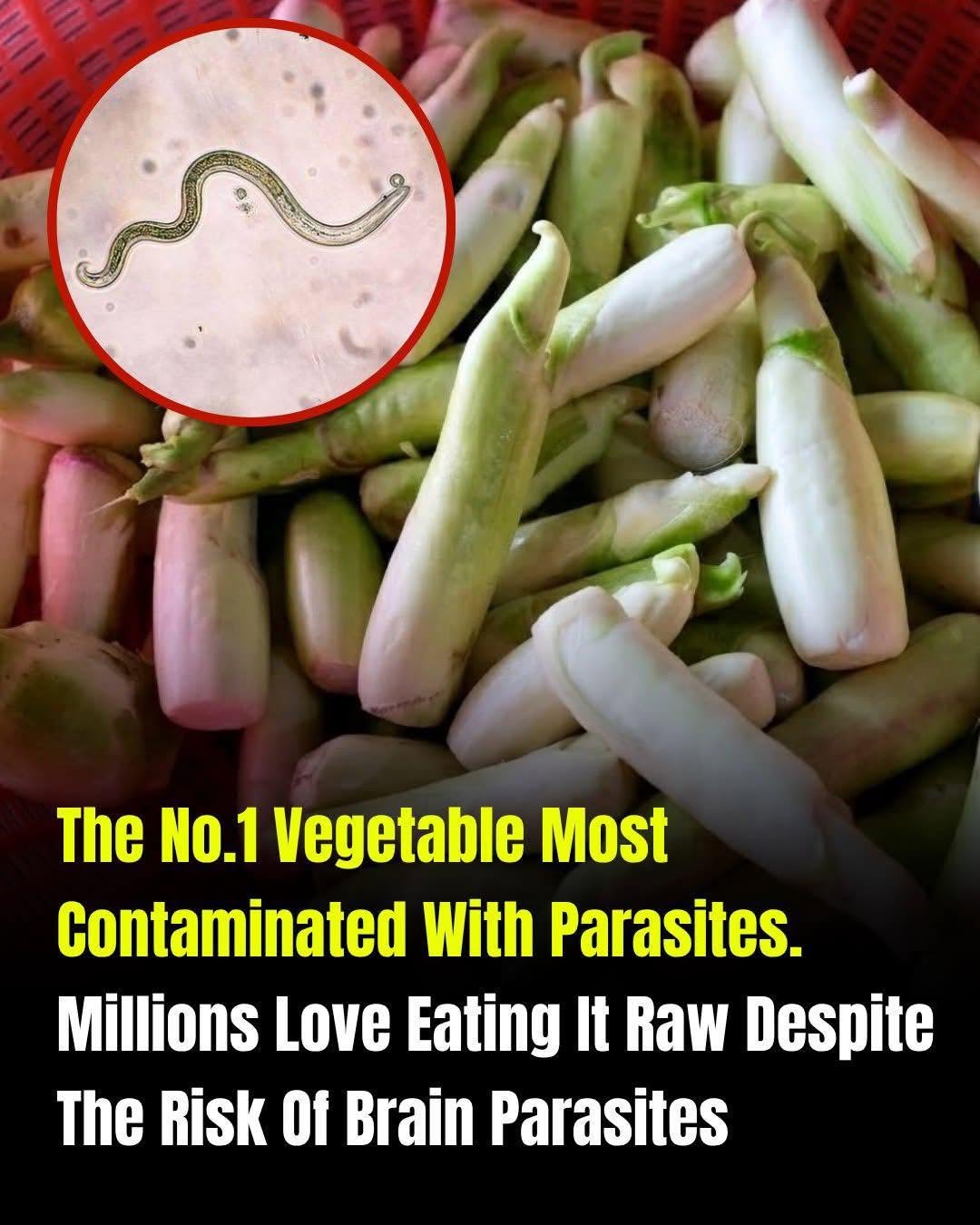
The Most Parasite-Contaminated Vegetable? What Experts Actually Say About Hidden Risks
Fresh vegetables are essential parts of a balanced diet, but produce that grows close to the soil or has many folds and crevices can sometimes carry dirt, bacteria, or microscopic parasites if it is contaminated during farming, transport, handling, or preparation.
There is no single vegetable that is always the “most parasite-contaminated.” Risk depends on where the produce was grown, the quality of irrigation water, the use of untreated manure, handling conditions, local sanitation standards, and whether the vegetable is eaten raw or cooked.
Leafy greens such as lettuce, spinach, cabbage, parsley, cilantro, and other fresh herbs may require particular attention because soil and contaminants can become trapped between their leaves. This does not mean these vegetables should be avoided. It simply means they should be stored, washed, and prepared carefully.
Why Leafy Vegetables Can Be Difficult to Clean
The uneven surfaces of leafy vegetables create many small spaces where soil, insects, and microorganisms may remain. Produce can become contaminated at several points before reaching the kitchen, including through irrigation water, animal waste, dirty equipment, storage containers, or human handling.
Washing vegetables can remove a significant amount of loose soil and surface contamination, but it cannot guarantee complete removal of every microorganism or parasite. Proper refrigeration, clean preparation surfaces, and cooking when appropriate are also important.
Remove Damaged and Outer Leaves
The outside leaves of lettuce, cabbage, and similar vegetables are exposed to the greatest amount of soil, handling, and environmental contact. Removing wilted, damaged, or visibly dirty outer leaves is a practical first step before washing.
For cabbage and compact heads of lettuce, discard the outermost leaves, separate the remaining layers when possible, and rinse them individually under clean running water.
Removing outer leaves can reduce dirt and some surface contamination, but it should not be described as eliminating the “vast majority” of all parasites. Contamination may also occur deeper within the vegetable, especially if unsafe water was used during cultivation.
Wash Produce Under Running Water
Wash your hands with soap and water before handling produce. Rinse vegetables under clean, cool running water while gently rubbing their surfaces with your fingers.
Separate leafy greens and rinse each leaf carefully. A clean salad spinner can then be used to remove excess water. Drying produce with clean paper towels may remove additional surface debris.
Do not wash vegetables with household soap, dishwashing liquid, bleach, or other cleaning chemicals. These products are not intended for food and may leave harmful residues.
Washing is an important first defense, but how the vegetables are stored, handled, and cooked can make an equally important difference.